Ring Spinning: Precision Drafting and Twisting for Stronger, More Even Yarn
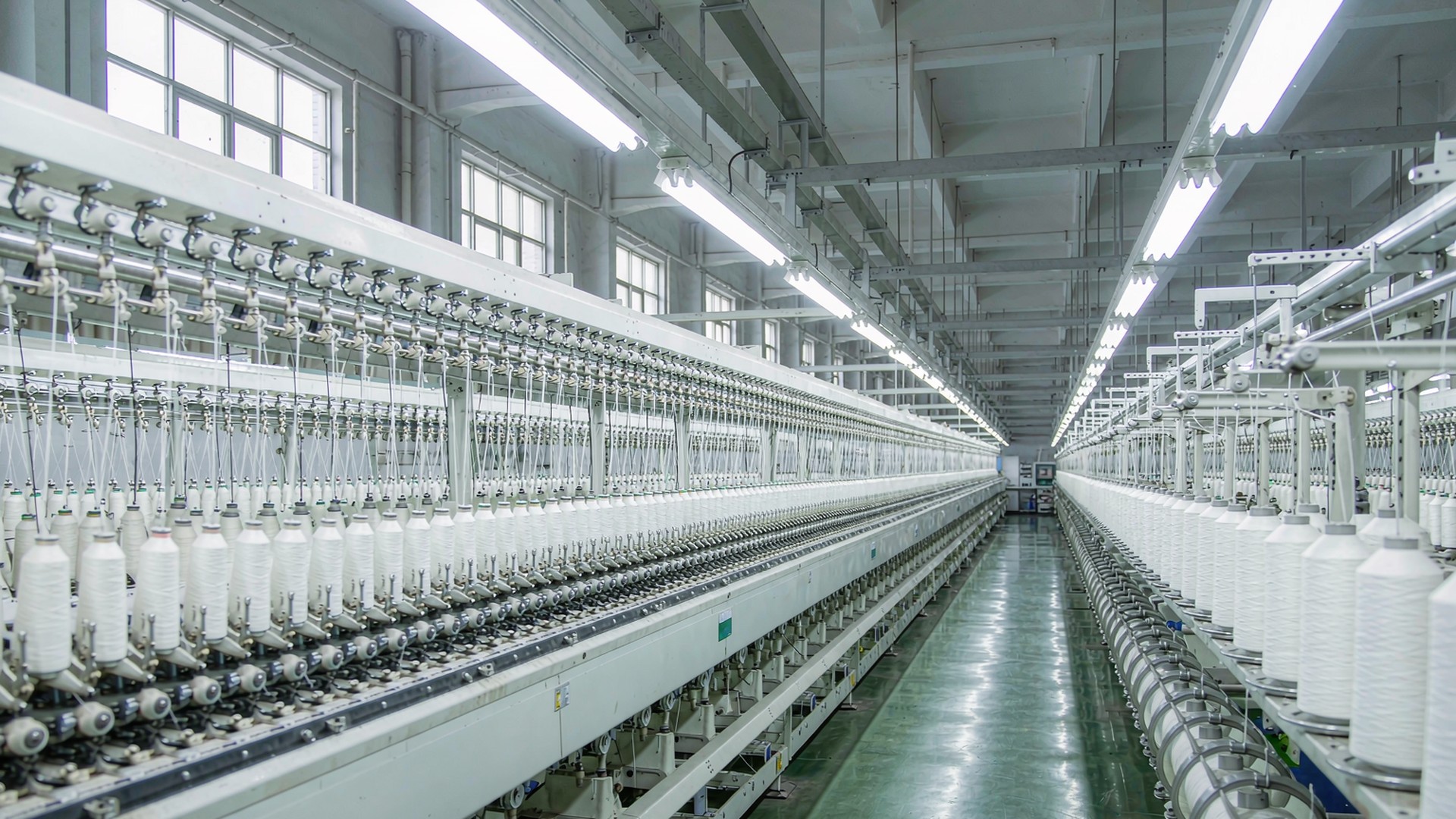
Ring spinning is the core process of the entire spinning line and the decisive gate for final yarn quality. The roving delivered by upstream processes has only been loosely gathered and shaped; it is drafting and twisting on the ring spinning frame that turns loose fibres into yarn that can actually be woven and used. At Hengji Textile we treat ring spinning as the heart of the spinning mill, with process parameters, machine condition and shop-floor management all organised around yarn quality.
In the Hengji spinning workshop, roving bobbins hang in neat rows above the frame and the strand is fed evenly into the drafting zone through the guide. There the roving passes through multi-stage precision drafting and is drawn progressively finer: the back zone pre-drafts and aligns the fibres, the middle zone controls fibre movement and restrains floating short fibres, and the front zone completes the final attenuation, so that the strand thins down and the fibres lie parallel and straight. Draft ratio, roller gauge and weighting are all set to process standards, and any deviation shows up directly as uneven yarn.
The drafted strand then enters the twisting zone. Spindles rotate at high speed and the traveller races around the ring, continuously inserting twist into the yarn. In that rapid revolution the loose fibres twist around one another and lock together, turning a fluffy strand into compact, even finished yarn with real tensile strength, which is then wound layer by layer onto the bobbin. Twist determines strength and hand feel; winding tension determines how smoothly the yarn unwinds downstream. Both must be controlled precisely.
The key to ring spinning is stability. Hengji Textile applies strict process control to twist, tension and spindle speed: twist is set by yarn count and verified machine by machine to guarantee strength; tension is monitored in real time and trimmed promptly to avoid ends down and slack bobbins; speed is matched to machine condition and raw material so that output and quality are balanced. Temperature and humidity are tightly controlled as well, reducing static and fly interference with yarn evenness. Through this system of control, the three core indicators of strength, evenness and hairiness remain stable.
Yarn quality directly determines fabric quality. Insufficient strength means more warp and weft breaks at weaving and lower efficiency; poor evenness leaves shading and bar marks on the greige surface; excessive hairiness leads to pilling and uneven dyeing. The foundation of good greige fabric is laid at the spinning frame. Hengji Textile controls quality from the source, keeping every indicator stable and predictable to give downstream weaving a reliable basis.
Rooted in Changzhou and committed to textile manufacturing, Hengji Textile keeps standardising and refining its spinning processes. From blow room and carding through drawing and roving to ring spinning, no stage is allowed to slip below standard. Stable yarn quality supports stable fabric quality — that is our promise to customers and the foundation of the business.
Related
Roving Process: Drafting and Twisting for Consistent Semi-Finished Yarn
The roving process serves as a vital link between drawing and spinning. After drawing, the sliver is fed into the roving frame. With controlled drafting and preliminary twisting, fibers are bundled to form standardized roving packages. Hengji Textile strictly monitors roving weight, twist and evenness, stabilizing semi-finished quality and ensuring smooth subsequent spinning, delivering consistent quality through refined process control.
Precise Carding for Stable Yarn Quality|Carding and Drawing Process at Changzhou Hengji Textile, a Key Step for Spinning Quality
Carding and drawing serve as the key connecting processes in spinning. With standardized process control, Hengji Textile uses carding machines to separate fibers and remove impurities, and drawing frames to combine and draft slivers. These steps align fiber orientation and balance unevenness, ensuring consistent yarn quality for high-quality fabric production.